
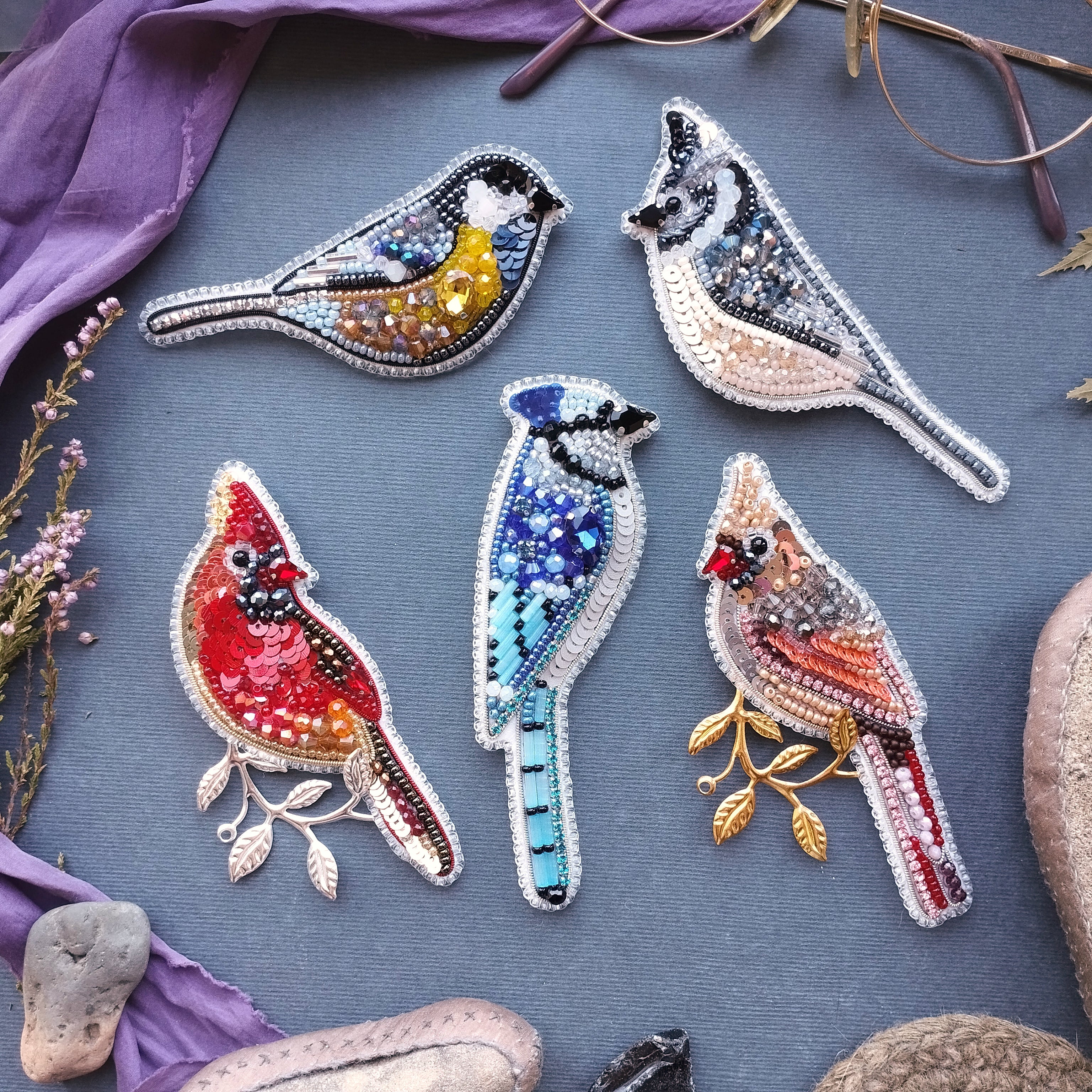
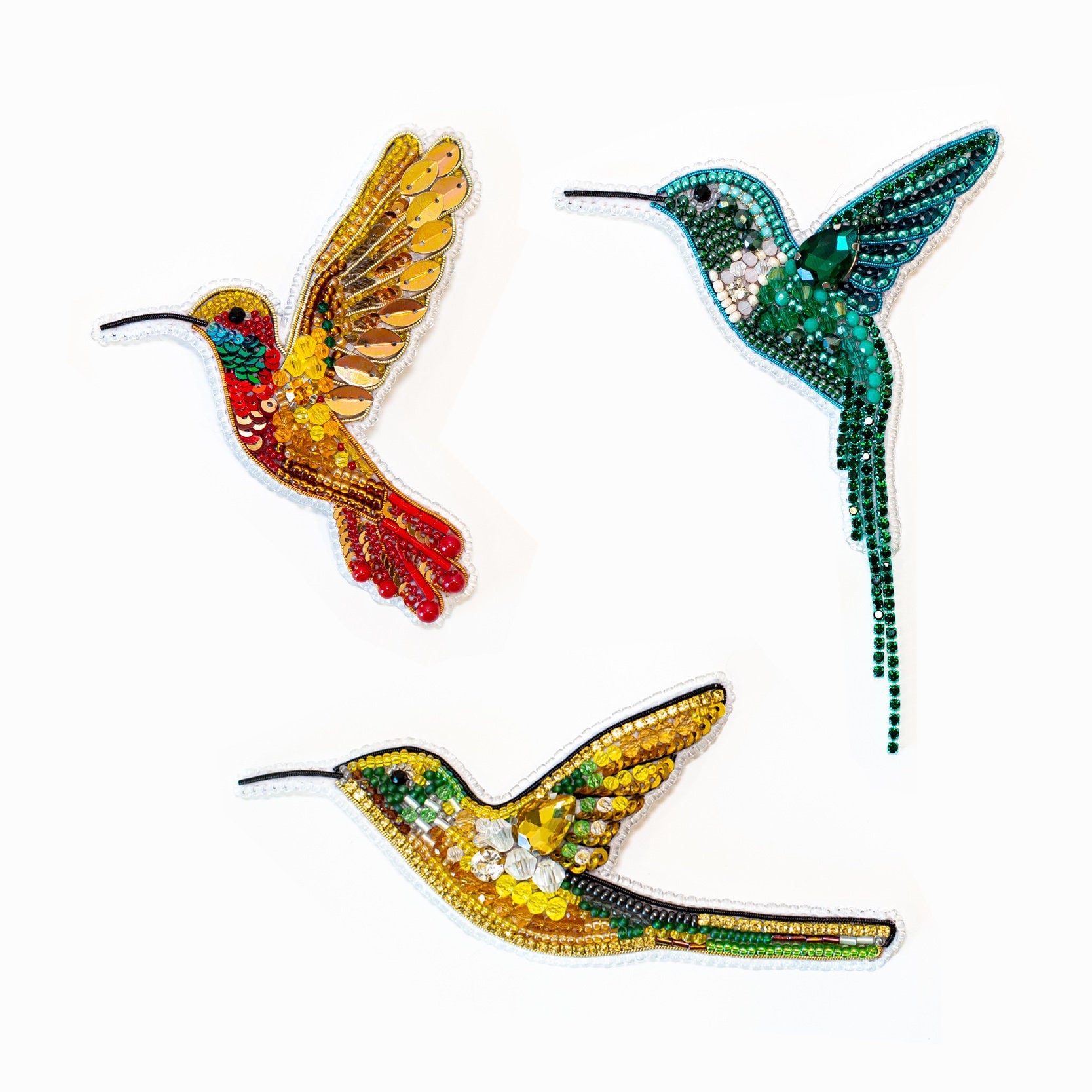


There are so many Czech bead finishes that two beads of exactly the same size and shape can look completely different.
In our first guide, we talked about transparent, silver-lined and opaque beads. But these are only the beginning. There are many other finishes that can add metallic shine, rainbow reflections, a soft glow or even a stone-like texture to your embroidery.
Let’s take a closer look at some of them.
Metallic Beads
Metallic beads have a reflective finish that gives them the appearance of metal. Depending on the color and coating, they can look like gold, silver, bronze, copper or darker antique metal.
They are especially useful when you want to add small bright accents, create an outline or give your embroidery a more jewelry-like appearance.
There are several types of metallic finishes:
Metallic — creates a shiny, metal-like surface. It can completely change the appearance of the glass underneath.
Galvanized — a metallic coating is applied to the surface of the bead. These beads can have a beautiful, intense shine, but some galvanized finishes are sensitive to friction, moisture and chemicals.
Permanent Metallic — designed to be more resistant to wear and keep its original appearance longer.
Metallic beads work beautifully as accents. Even a small amount of gold, bronze or silver can make the details of a brooch much more noticeable.
AB — Aurora Borealis
AB stands for Aurora Borealis, or Northern Lights.
It is an iridescent coating that reflects several colors at once. Turn an AB bead in the light and you may see flashes of blue, pink, gold, green or violet over its original color.
The important thing is that AB is a finish, not the actual color of the glass. The same AB coating can be applied to beads of different base colors, and the final result will look different every time.
AB beads are brighter and more playful than ordinary glossy beads. They are perfect for highlights and for areas of embroidery where you want the light to constantly change as the piece moves.
You usually don’t need many of them — a few AB beads among quieter colors can already create a beautiful sparkling effect.
Luster Beads
Luster — also spelled lustre — is a surface finish that adds a soft glow to the bead.
Unlike a strong metallic coating, luster does not necessarily make the bead look like metal. Instead, it gives the surface extra depth and a smooth, slightly pearlescent shine.
The effect can be very subtle or quite noticeable depending on the base glass and the type of coating.
Luster is a good choice when regular beads look too simple, but metallic or AB beads would be too bright. It adds light without becoming the main focus of the design.
Picasso and Travertine Finishes
Picasso and travertine beads look very different from perfectly smooth, evenly colored glass.
Their surface has an irregular, mottled finish that can resemble natural stone, ceramics or an aged material. You may see darker areas around the edges, tiny spots or variations in color from bead to bead.
And that variation is part of their beauty.
Picasso finish often creates a stronger mottled or speckled effect and can give the bead a rustic, earthy appearance.
Travertine finish usually creates a more stone-like, textured effect inspired by the natural appearance of travertine.
These beads are especially useful when you want the embroidery to look less uniform and more organic. They work beautifully in flowers, leaves, insects, animals and designs inspired by nature.
Opal and Semi-Transparent Beads
Not every bead is completely transparent or completely opaque.
Semi-transparent beads allow some light to pass through the glass, but you cannot see through them as clearly as regular transparent beads. This gives the color more depth while keeping some of the lightness of transparent glass.
Opal beads usually have a softer, cloudy or milky appearance. Light still interacts with the glass, but the result is much more diffused.
These finishes are wonderful for creating gentle transitions. They can soften a design and work especially well when a completely opaque color feels too heavy and a transparent bead feels too light.

The Finish Can Change Everything
When choosing beads for embroidery, color is only part of the decision.
Imagine several beads in almost the same shade of blue. One is opaque, another is transparent, another has an AB coating, and another has a metallic finish. On a color chart they may all be called “blue,” but in finished embroidery they will behave completely differently.
Some will absorb light. Some will reflect it. Some will sparkle only when the brooch moves.
That is why combining different finishes is one of the easiest ways to add depth to bead embroidery without using dozens of different colors.
There is no single “best” finish. The right choice depends on what you want a particular part of your design to do — stay quiet in the background, create a smooth transition, add texture or catch the light.

